In retrospect: With an aging development workforce, SAP started socializing an intellectual renewal/cultural revolution within the company at the beginning of 2013. As a part of these efforts, I got the amazing opportunity early in my career to program manage an initiative that had university students developing multiple consumer iOS applications for the sports industry. Interesting things about this project: we were for the most part completely autonomous to choose how we work (we didn’t have to follow the many SAP development process guidelines), right down to where we worked (we built our own space within the SAP Waterloo building). This was my first time working with actual designers when developing (a mainstay within consumer software development now but previously within enterprise software this was rare). Looking back it’s also obvious I got my love of iOS and startup culture from this venture. Also noteworthy are the careers of these students that resulted, all working for notable tech companies, some still in Canada and others in the valley, all whom I keep in touch with periodically. I feel really privileged to have got to work with these folks so young in their careers and the mobile apps that resulted were pretty slick too. The following blogs talk about the program and the mobile apps that resulted.
ORIGINAL POSTS FOLLOW FROM JANUARY 14, 2013
(https://blogs.sap.com/2013/01/14/out-with-the-old-in-with-the-new-3/ & https://blogs.sap.com/2013/02/26/consumer-grade-ux-sports-mobility-sap-get-out/)
Out with the old, in with the new?
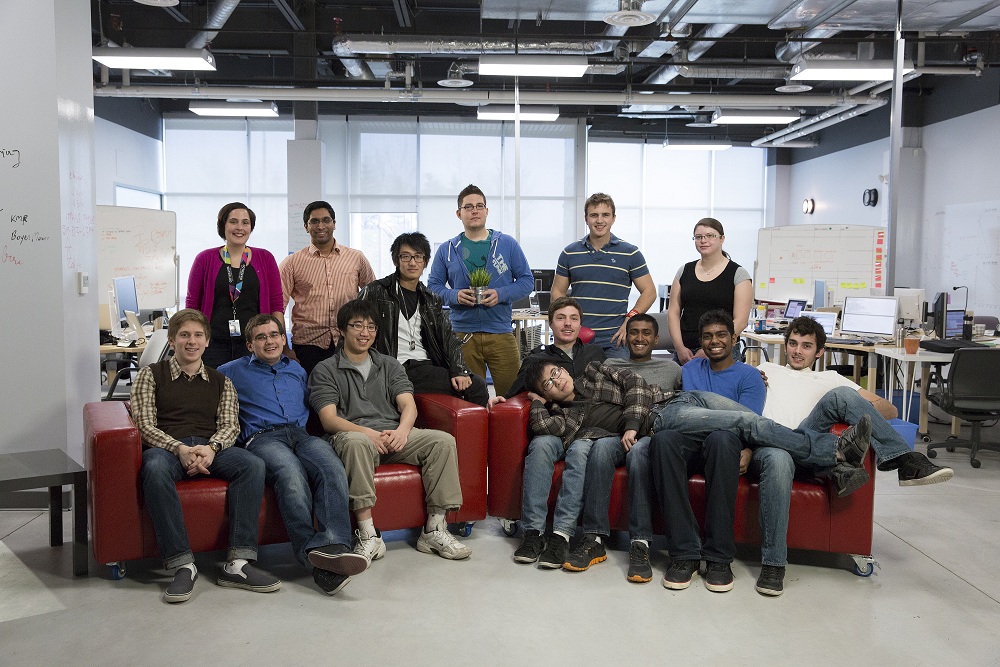
As I sit at my bright red modular desk that can be wheeled to any area of our newly created, open-concept WatHaus, I am reminded that with any new beginning you should take some time to reflect on what has past. So I will take this opportunity to reflect on my life as the onsite program manager of a radical challenge taken up by our next generation workforce, sharing what we have learned and what we will continue to build-upon in our new year.
Have you ever had to create a mobile application from start to finish in less than 90 days using Design Thinking and a cool in-memory database called HANA? Well that is what we asked 12 co-ops/interns from the University of Waterloo and University of Guelph to accomplish during the last semester of 2012.
With Design Thinking in mind, we purposefully recruited students with various backgrounds to form multi-disciplinary development teams to sit together in a brand new space at our SAP Waterloo Labs’ site to facilitate collaboration and innovation, now officially coined the WatHaus.
What the students may have lacked in experience, they picked up with enthusiasm and quickly went to task with learning iOS5 and HANA, while soaking up methodologies employed by SAP such as Agile software development and Design Thinking (with help and support from SAP technical mentors and product management). The positive energy emanating from the WatHaus on any given day was truly inspiring. Not to say everything was always rainbows and lollipops. We of course did have our challenges but we learned along the way.
It cannot be said enough that Interaction and Visual Design is critical to any mobile application, consumer or enterprise, and our students quickly learned this lesson via user feedback gathering throughout development. Sometimes students would be frustrated that users didn’t grasp certain features of their apps right away and were hesitant to refactor code. The payoff to refactoring was made evident when the apps were reshown to new users and those same features were more intuitively grasped.
The pride of ownership that the students had for their finished mobile apps (yes – they successfully completed their challenge) was immense and just goes to show you how having ownership over something from start to finish can go a long way with innovation (hello startup culture?) and productivity efficiencies.
Does this mean we should cast out our experienced programmers and embrace new young guns? Not so fast. Looking back over the entire semester, I believe the key to success with this program lay with the reciprocal nature of the relationship between the students and the experienced SAP employees (including myself). While the students brought fresh eyes to existing processes and youthful enthusiasm, they also needed mentorship and support to get them past development roadblocks and experience to help them achieve deadlines. Design Thinking advocates multi-disciplinary teams for a reason as innovation comes from the collision of different perspectives from all kinds of diverse backgrounds. I would argue what we need is more mixing of old with new.
Consumer Grade UX + Sports + Mobility = SAP? GET OUT!
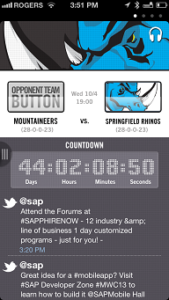
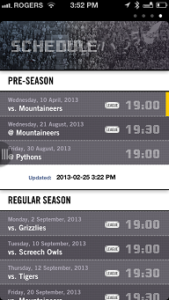
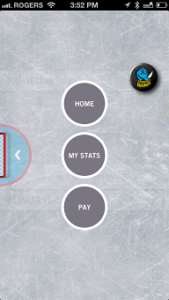
In honor of Mobile World Congress (MWC) this week I decided to focus my blog on a really cool mobile sports app framework that people in Madrid may not realize was co-developed by our very own developers at SAP Waterloo Labs. While I can’t promise my marketing side won’t get the better of me with this blog entry, I will try to frame it around the top 5 cool things you wouldn’t know offhand by just looking at this framework. Without further ado:
- It’s richer than just a mobile app. While this may look like a screenshot of an iOS app, what it represents is a fully customizable framework to augment any arena experience. The headphones symbol in the top right play music and sports content from an arena audio stream. The twitter feeds can be adjusted to follow any twitter handle specified, automatically refreshing live content. The score is also a live feed, so you never miss anything if you have to leave your seat.
- This framework was created using Design Thinking in just 10 weeks. It was developed by two teams, one located here in Waterloo, and the other in Palo Alto. Let me also clarify that 10 weeks is not a lot of time to produce a framework that adheres to SAP’s enterprise quality standards. However, when you can design virtual development teams to take advantage of local expertise, this challenge can be met helped with steady communication through virtual scrums and common virtual tools.
- Consumer grade UX is more than just pretty screens. How about an address field that automatically configures itself based on your local country address formatting standards (how many Canadians begrudge fitting their province in a state field for example)? What about those innate gestures that every iPhone user has come to expect, like pull-down to refresh a screen? This framework was built with all of these interactions in mind so the user can easily navigate and most importantly – adopt it. That’s consumer grade UX.
- Sometimes what you don’t see can be the real jewel. This framework plugs into an incredibly powerful SAP/Sybase 365 mobile commerce platform that enables financial and loyalty transactions. Imagine being able to offer a simple way to make in-seat purchases, earn rewards, and participate in loyalty programs? (I think it would certainly take the sting out of paying $10 for a stadium hotdog!) But wait, we also have other cool SAP technologies we can plug into with this framework (how about analytics, I hear we may also know a thing or two about that with sports…).
- What kind of sports app framework would this be if it didn’t use gamification? However, how many apps can say you can play with the menu? Check out the screens – that puck you see can be shot with your finger into a net. Given this framework is customizable, this game can be adjusted for any sport – like basketball or soccer and net or football and upright. Those menu items also can be populated to point to other consumer based applications, like SAP’s photoTribe.